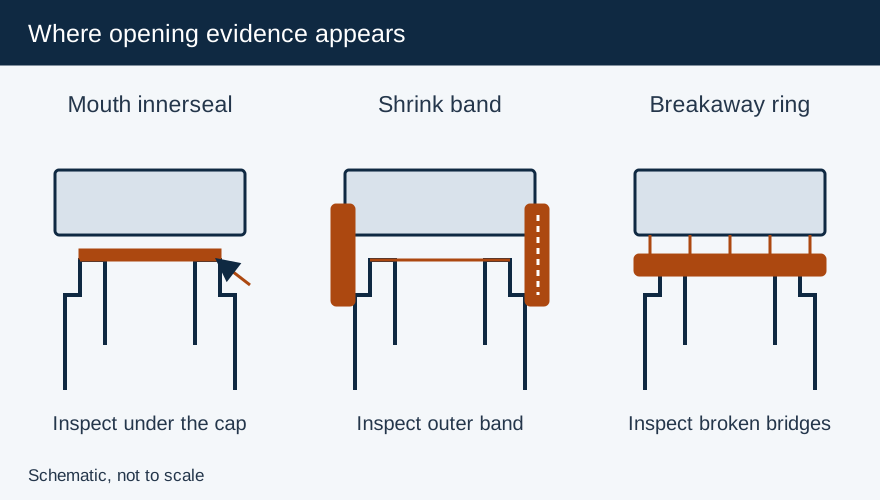
Closure Integrity Testing After Induction Sealing
Select leak and seal-quality tests by package purpose, method scope and validated sensitivity; distinguish presence inspection, peel strength and integrity.
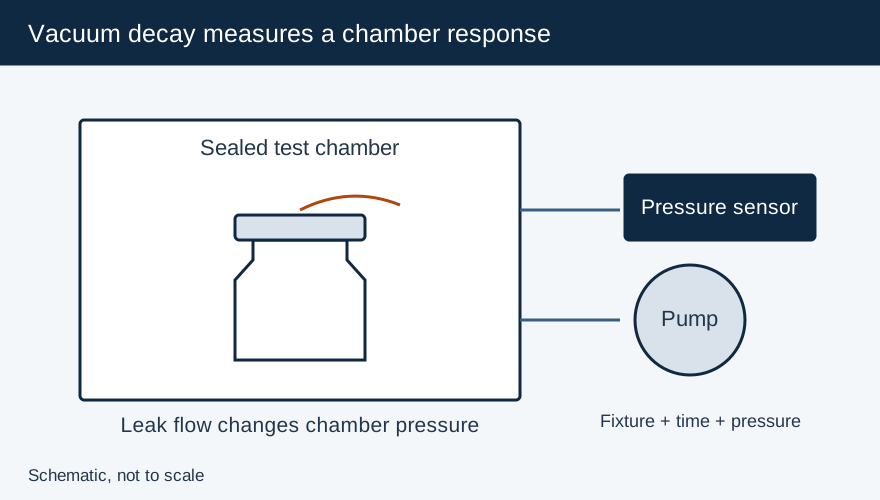
Choose a closure-integrity test by the protection the package must provide and the defect it must detect. A visible foil membrane, a strong peel result and a measured leak rate are different evidence. Using one as a substitute for another can release a package with an undetected leakage path or reject an otherwise acceptable opening design.
| Question | Candidate method | Scope and interpretation |
|---|---|---|
| Is there a detectable leakage path? | ASTM F2338 vacuum decay | Validate fixture, pressure, timing and sensitivity for the package |
| Does a liquid bottle have gross leakage? | ASTM D5094/D5094M | Rigid/semi-rigid liquid containers up to 4 L with threaded or lug closures; select the applicable procedure |
| Does flexible packaging with headspace gas have gross leaks? | ASTM D3078 bubble emission | Flexible-package scope; small leaks can be missed or blocked by product |
| What force separates a flexible seal specimen? | ASTM F88/F88M | Seal strength with specified specimen/support geometry; separate from leak integrity |
| Is a liner present or a cap misseated? | Validated presence/position inspection | Screens the defined visible or sensor-detectable condition |
Begin with product purpose and method scope
USP <1207> Package Integrity Evaluation—Sterile Products addresses integrity assurance for nonporous packaging intended for sterile pharmaceutical products. Its framework includes method selection and validation over the product lifecycle. Establish whether that scope applies to the product before citing it as a qualification basis.
For food, chemicals and other nonsterile packs, define the required leakage, barrier and distribution performance with the product quality team. Choose the applicable test and acceptance criterion for that purpose. A standard’s number identifies a method or framework; the package specification still has to define what result is acceptable.
Vacuum decay requires package-specific development
In vacuum decay, the package sits inside a chamber and the instrument monitors the chamber’s pressure response after evacuation. PTI explains that sensitivity depends on package design, fixture and the selected pressure/time parameters. Its published equipment capabilities therefore need confirmation on the proposed package.
ASTM F2338 covers nondestructive vacuum-decay leak detection. Develop the test with representative intact packages and appropriate known-leak challenges. Evaluate headspace, product blocking a defect, package deformation and the fixture’s contribution to the response. Keep the control definition and acceptance threshold with the validated method.
Test the intended package state. If a study removes or loosens a cap to examine the foil separately, document that as a distinct diagnostic configuration; it does not reproduce the intact sale package. A nondestructive test can preserve the sample physically, but return to sale depends on the approved handling, exposure and quality-disposition procedure.
Bubble emission and bottle leakage are different scopes
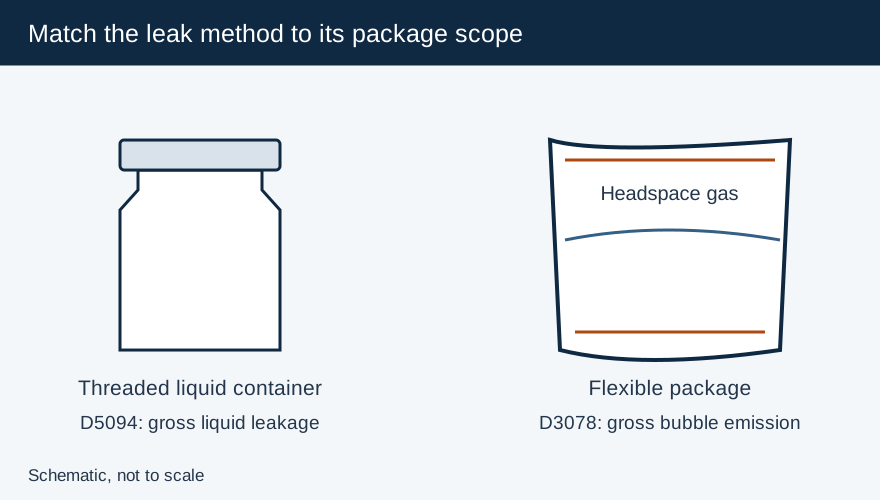
ASTM D3078 concerns gross leaks in flexible packaging containing headspace gas. Its scope notes that product and test conditions influence sensitivity and that small leaks may remain undetected. A bubble observation on a rigid bottle should be described under the actual validated procedure, rather than automatically labeled D3078.
ASTM D5094/D5094M specifically concerns gross liquid leakage from rigid and semi-rigid containers up to 4 L with threaded or lug-style closures. Its scope cautions that the methods may be unsuitable for containers transporting hazardous materials; use the applicable transport qualification for those packages. Evaluate its applicable procedure against the intended bottle and transport exposure. Gross-leak checks and sensitive leak detection answer different risk questions; choose the evidence needed for the product.
Measure bond quality separately from a leak
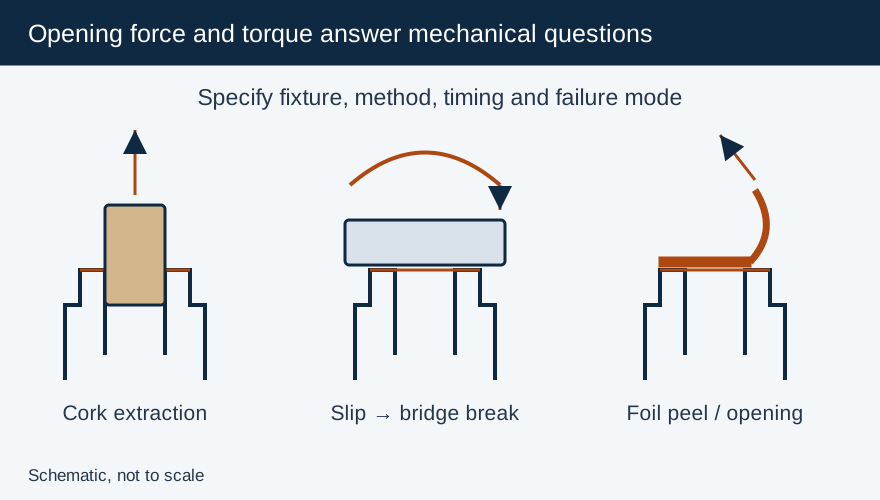
ASTM F88/F88M addresses seal strength of flexible barrier materials and permits flexible-to-rigid seal assessment within its defined methods. Record specimen width, gripping/support technique, test speed and failure mode. For a complete circular innerseal or pull-tab opening test, define the fixture and method that represent that geometry.
A high opening force cannot establish that every part of the perimeter is closed. Conversely, a leak-tight pack can still be difficult to open or have an unacceptable removal mode. Set seal-quality and leak criteria separately, then use both where the package requires them.
Release evidence should describe the actual tested population
Record bottle, cap and liner lots; fill condition; cap application method; sealer recipe; conditioning interval; test configuration and control results. Identify whether inspection is sampled or applied to every package. Keep process sensors separate from the qualified leak result: liner presence, cap height or a thermal pattern can screen useful defects without proving all leak paths are absent.
For a new material or process change, repeat the affected method-development and package-performance checks. Use the seal-integrity hub to connect at-line tests with online inspection, and the troubleshooting guide to investigate a failed package before altering its acceptance criterion.
Frequently Asked Questions
Does passing vacuum decay authorize a tested sample for sale?
Disposition follows the approved quality procedure, including test exposure, handling and traceability. Nondestructive describes the test approach, not automatic sale eligibility.
Does ASTM D3078 cover all bottle bubble tests?
Its scope is gross leaks in flexible packaging containing headspace gas. Choose and validate a procedure appropriate to a rigid bottle and identify that procedure accurately.
Primary Sources & Referenced Standards
- USP <1207> Package Integrity Evaluation—Sterile Products
- ASTM F2338-24: Nondestructive leak detection by vacuum decay
- ASTM D3078: Gross leaks in flexible packaging by bubble emission
- ASTM F88/F88M-23: Seal strength of flexible barrier materials
- ASTM D5094/D5094M-24: Gross leakage of liquid containers with threaded or lug closures
- PTI — Vacuum Decay Leak Detection (ASTM F2338)
- Enercon: Getting Started with Induction Cap Sealing
More about Seal Integrity Testing
Leak testing, peel and opening checks, online inspection and tamper-evident packaging requirements for the relevant product.