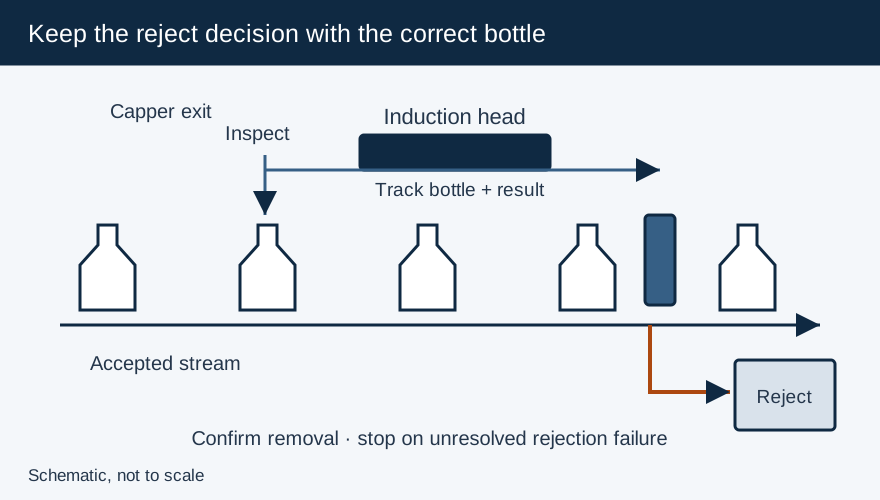
Capping and Induction Sealing: Line Interfaces and Rejection
Specify capper-to-sealer transfer, conveyor stop protection, inspection signals and confirmed rejection for an induction sealing line.

Browse all 13 source-backed guides organized across Induction Sealing Machines, Cap & Liner Selection, and Seal Integrity Testing.
Specify capper-to-sealer transfer, conveyor stop protection, inspection signals and confirmed rejection for an induction sealing line.
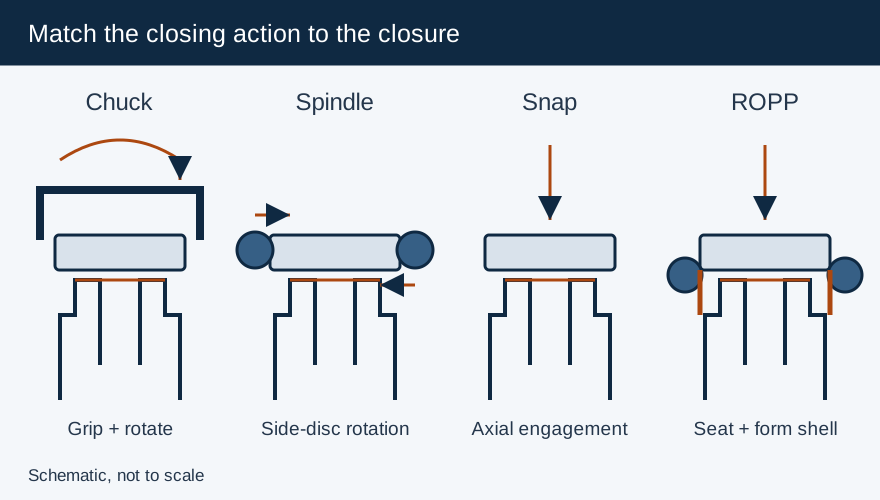
Compare chuck, spindle, snap and ROPP closing mechanisms, then specify container support, torque checks and the capper-to-sealer interface.
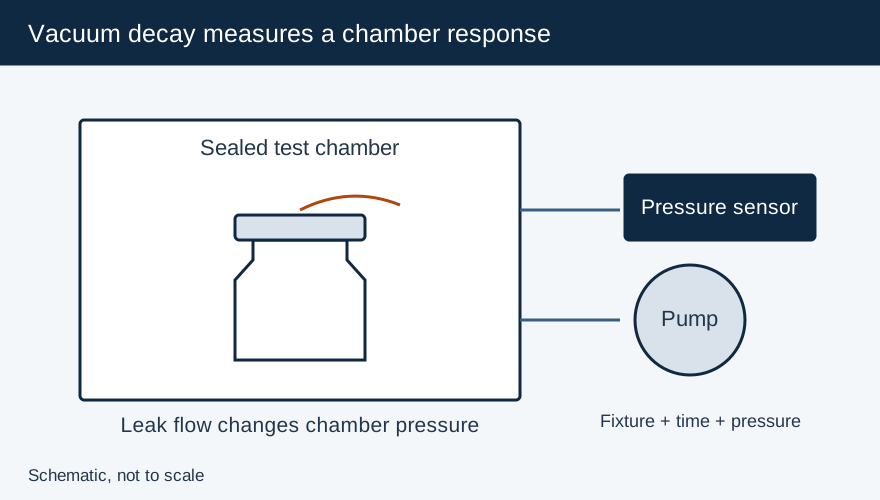
Select leak and seal-quality tests by package purpose, method scope and validated sensitivity; distinguish presence inspection, peel strength and integrity.
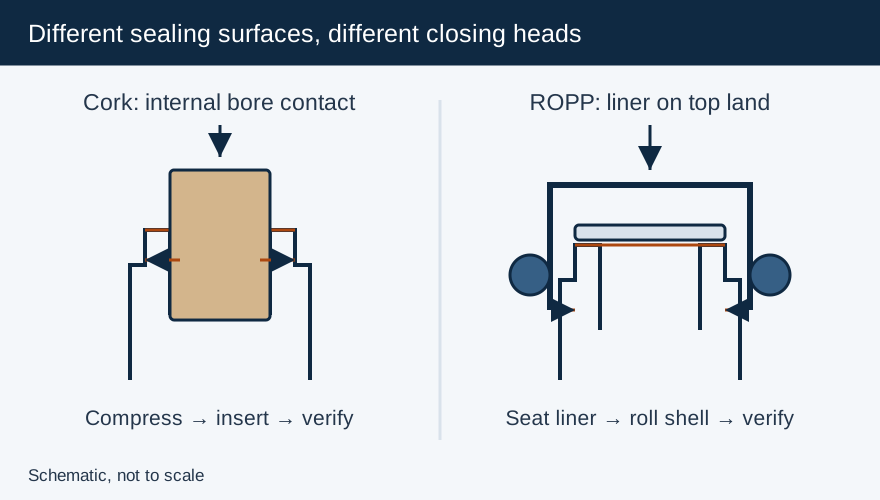
Compare still-wine cork insertion and ROPP screw capping by bottle finish, closing action, headspace control, liner and release tests.
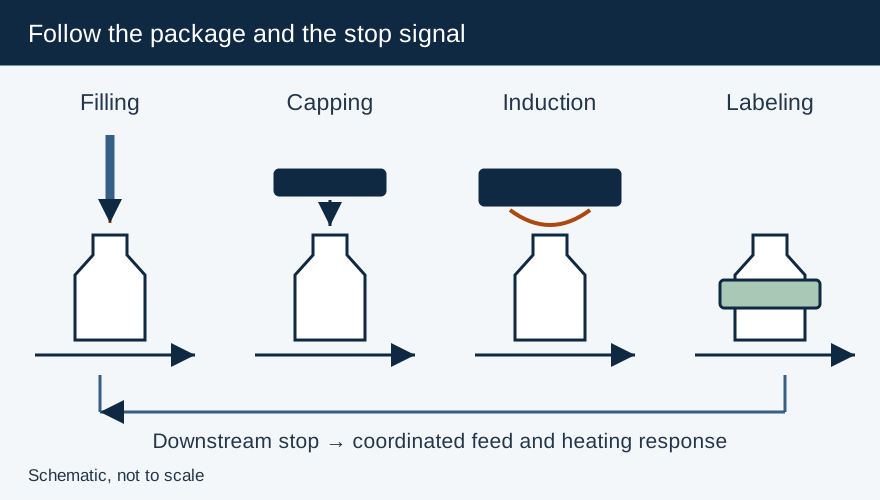
Define conveyor, rate and reject interfaces between filling, capping, induction sealing and labeling, including safe stop and restart behavior.
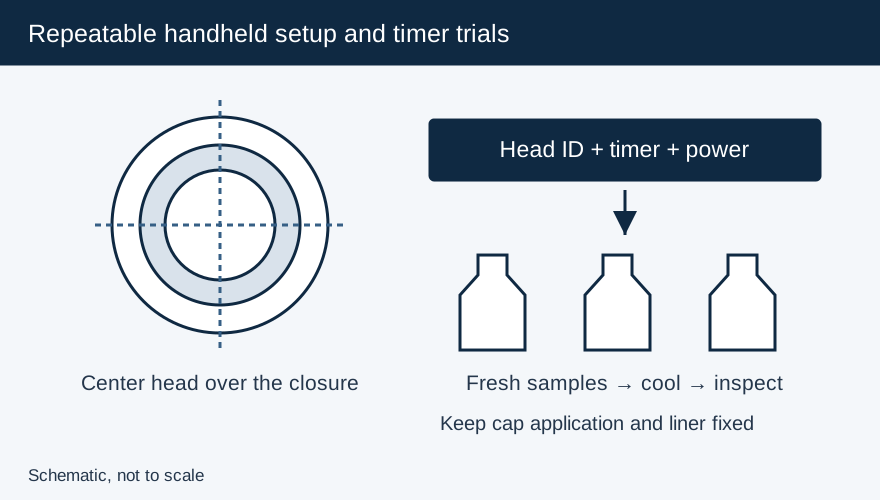
Choose the correct handheld head for small through 100 mm-plus caps, then qualify timer, power and centering on the actual bottle and liner.
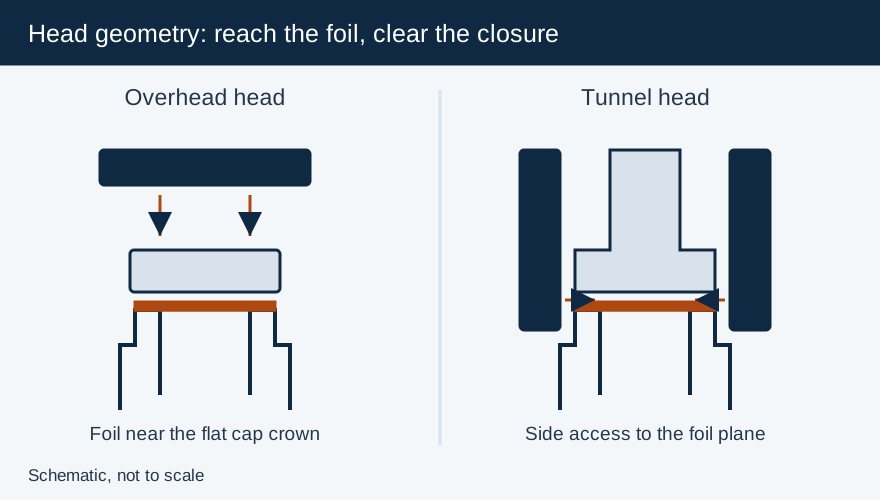
Compare overhead and side-coupled induction heads using foil height, cap profile, bottle clearance and supplier-specific coil ranges.
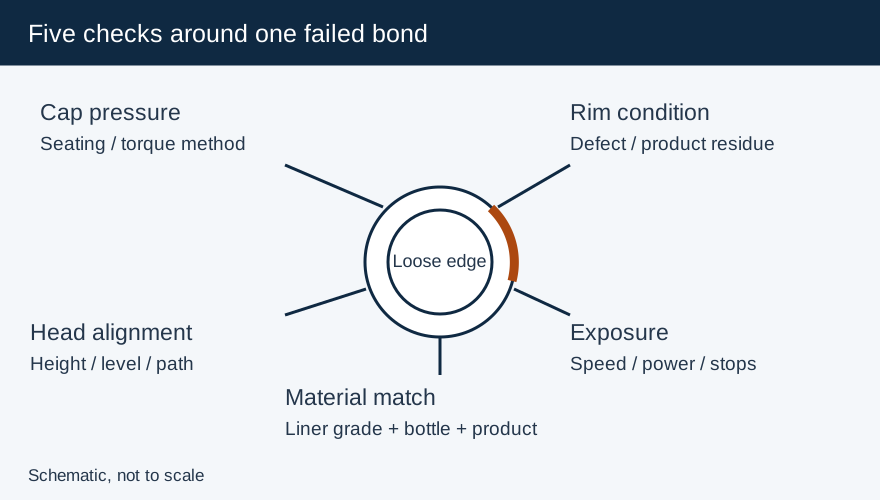
Use five checks—cap pressure, rim condition, coil alignment, conveyor exposure and material match—to isolate foil adhesion failure and overheating.
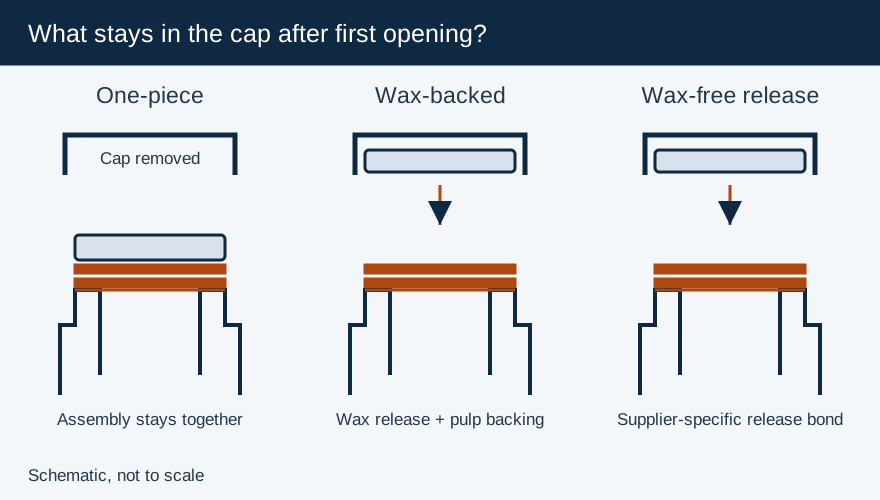
Compare one-piece, wax-backed two-piece and wax-free release liners, including layer function, backing retention and container compatibility.
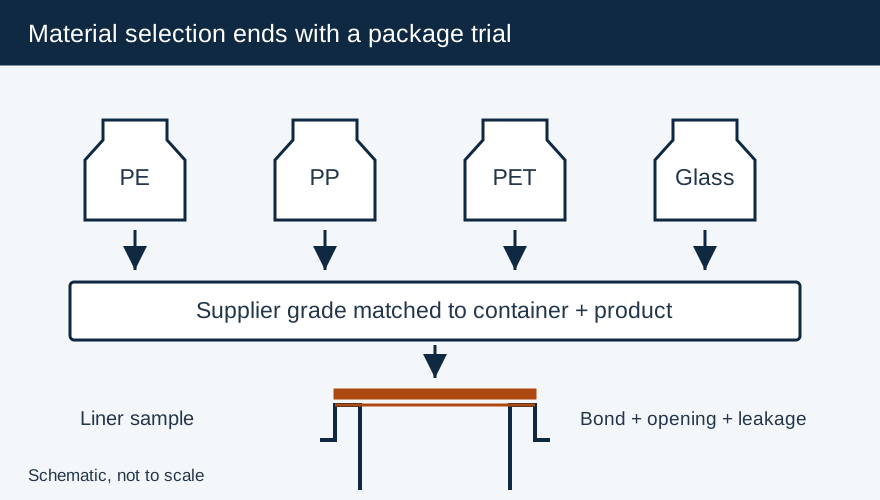
Select foil liners by container material, opening behavior, product exposure and resealing needs; compare pressure-sensitive and compression liners.
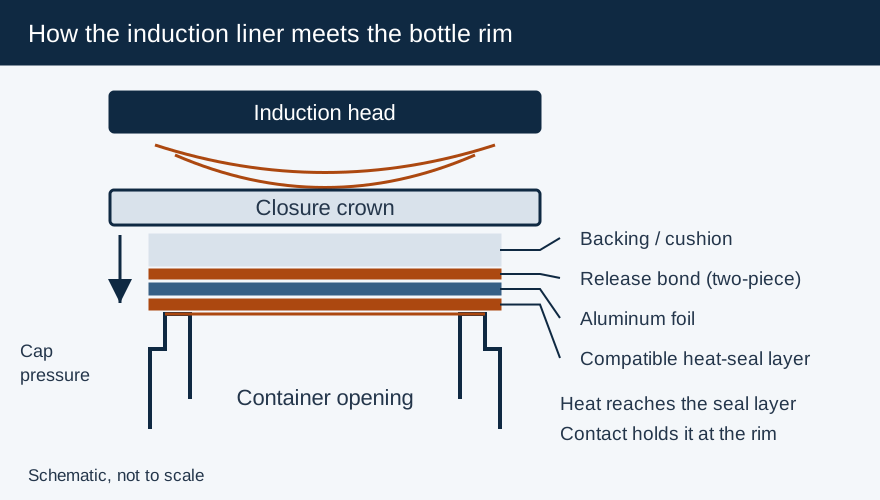
Select induction power, cooling and sealing heads using actual package geometry, then qualify pressure, heat and conveyor time together.
Diagnose missing, weak and overheated induction seals by recording torque, material, rim condition, alignment and speed before changing power.
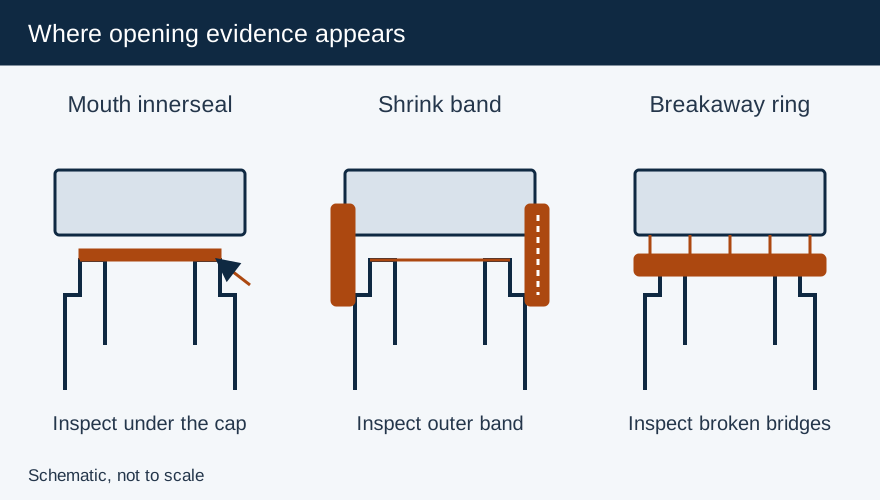
Compare foil innerseals, shrink bands and breakaway closures by visible entry evidence and leak protection, with the scope of 21 CFR 211.132.