
Define the evidence the package needs
Leak testing, bond-strength testing and process inspection answer different questions. Select methods that match the product, package and defect risk, then define the control samples and acceptance criteria. An intact-looking foil or a normal thermal pattern alone does not establish all required package performance.
| Evidence | Candidate approach | Qualification input |
|---|---|---|
| Leakage path | ASTM F2338 vacuum decay | Fixture, pressure, time and package-specific sensitivity |
| Gross bottle leakage | ASTM D5094/D5094M | Rigid/semi-rigid liquid container up to 4 L; threaded/lug closure |
| Seal strength | ASTM F88/F88M where applicable | Specimen geometry, support and failure mode |
| Process defects | Presence, position, vision or thermal inspection | Defined detectable defect classes and reject challenge |
Keep the test scope visible
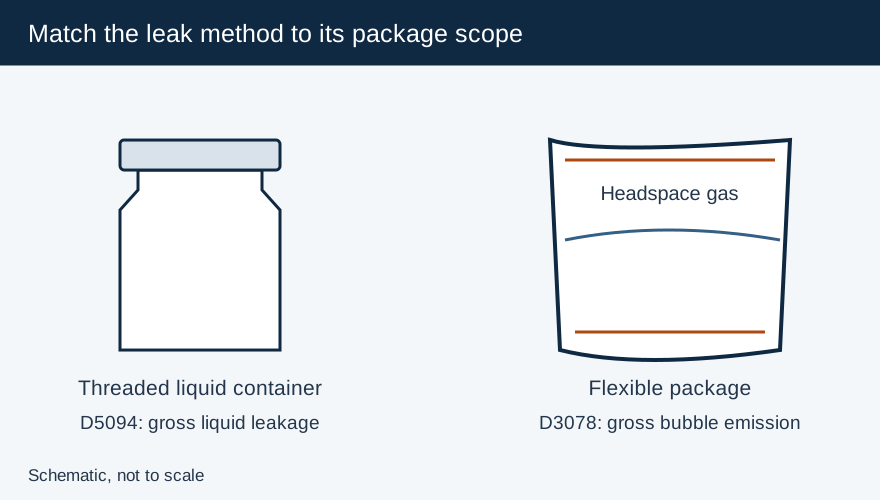
USP <1207> addresses nonporous packaging intended for sterile pharmaceutical products. Establish that applicability before using it as a qualification framework. For hazardous-material transport containers, use the applicable transport qualification: D5094 cautions that its methods may be unsuitable. ASTM D3078 concerns gross leaks in flexible packaging containing headspace gas; choose a suitable procedure for a rigid liquid bottle instead of labeling every bubble observation D3078.
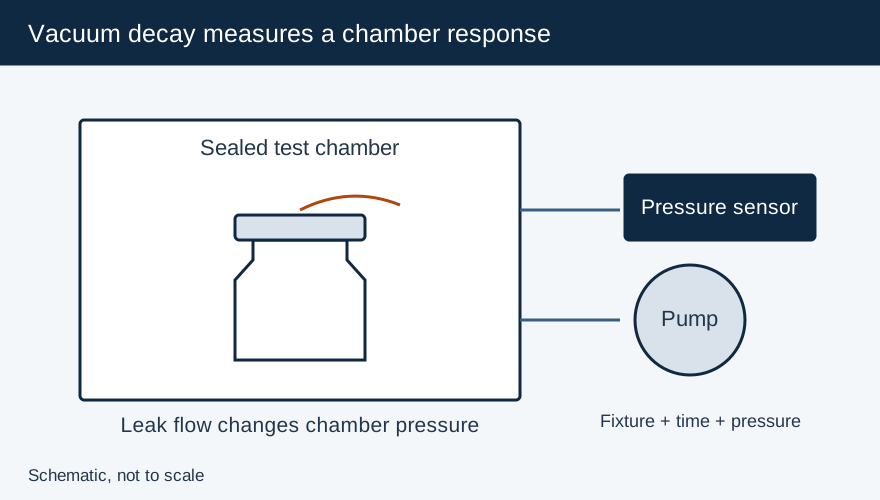
PTI explains that vacuum-decay sensitivity depends on package design, fixture and pressure/time settings. Qualify the method using intact controls and appropriate known defects. Treat a loosened-cap foil study as a separate diagnostic configuration from the intact sale package. The CCIT guide covers method selection and sample disposition.
Combine peel checks with online inspection
Record the geometry, support, speed and failure mode for a seal-strength or opening test. A peel force measures a mechanical response; leakage evidence comes from the appropriate integrity method. Set both criteria where the product needs both protection and usable opening.
Enercon's cap-inspection accessories include missing-foil, high/cocked-cap and stalled-bottle detection, with rejection and stop-related functions. Presence detection finds a missing component; a camera viewing a foil before recapping can inspect visible placement or damage. Specify the inspection position and challenge the actual defect classes rather than assuming a camera can see through an opaque closure.
Vision Partners' induction-seal thermal inspection study uses heat-profile images across product, cap and fill-temperature variations. For an online thermal system, establish camera view, delay from sealing, material/temperature variation and representative defect challenges. Correlate the decision with the package's validated seal tests; a thermal classifier's acceptable pattern is specific to its trained and qualified application.
Prove rejection and tamper evidence separately
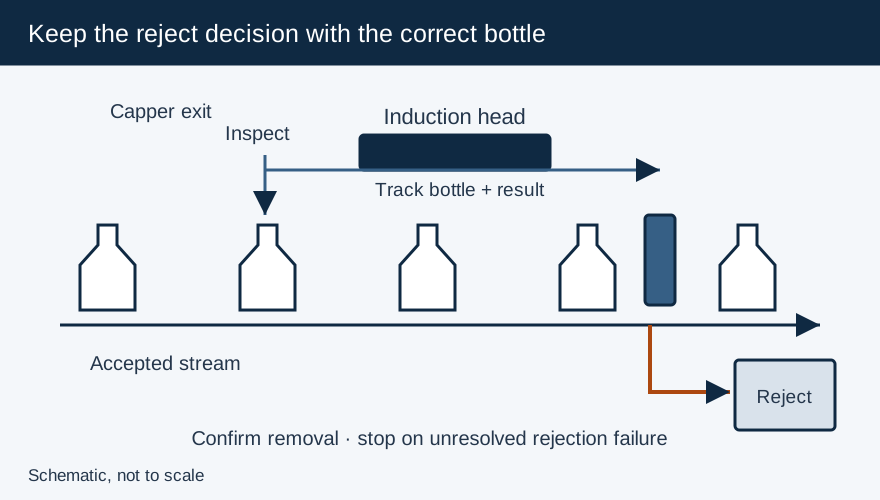
Track the affected bottle from detection to reject, verify removal and define the response to a failed rejection. Recheck that response at the intended speeds and during stop/restart conditions. Use the capper/sealer interface guide to document the control sequence.
For covered retail OTC human drugs, 21 CFR 211.132 requires the applicable visible-entry feature and labeling. The tamper-evidence guide compares innerseals, bands and breakaway caps. A successful leakage test does not substitute for visible opening evidence, and a selected packaging technology alone does not establish compliance.
Primary references
- PTI — Vacuum Decay Leak Detection (ASTM F2338)
- Cap Inspection - Induction Cap Sealing
- 21 CFR § 211.132 — Tamper-evident packaging requirements for over-the-counter (OTC) human drug products
- USP <1207> scope
- ASTM F88/F88M seal strength
- ASTM D5094/D5094M liquid-container leakage
- Vision Partners: Thermal seal inspection for induction-sealed packaging