
Integrating Filling, Capping and Labeling: Define Transfer, Timing and Reject Interfaces
Define conveyor, rate and reject interfaces between filling, capping, induction sealing and labeling, including safe stop and restart behavior.
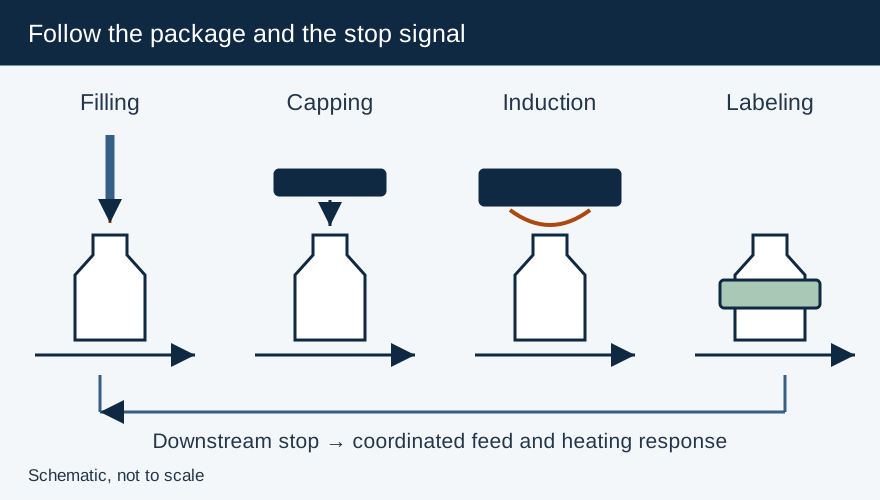
Specify a filling line by its transfer interfaces and sustained output, not by adding together stand-alone machine ratings. A spill at the filler can reach the sealing land; a misaligned cap can pass to the sealer; a downstream blockage can leave bottles under the induction head. The line acceptance trial must therefore exercise the complete filled-container path.
| Transfer | Package condition to preserve | Controls and mechanical inputs | Acceptance check |
|---|---|---|---|
| Filler to capper | Stable filled bottle; suitable sealing land | Drip control, guides, transfer support and cap presentation | No transfer spills; closure seats consistently |
| Capper to sealer | Seated lined closure and stable motion | Application setting, belt speed, centered cap path and head height | Required seal performance across running conditions |
| Sealer to inspection/reject | Identifiable package and inspection result | Tracking, suitable handling/cooling and reject access | Challenged defects removed and acknowledged |
| Accepted product to labeler | Clean exterior and controlled spacing | Conveyor handoff, label sensing, accumulation and stop feedback | Label position, code readability and recovery after interruption |
Balance capacity around the limiting operation
E-PAK’s How Fillers, Cappers, Conveyors and Labelers Work Together explains that the stations operate as a coordinated line. Define the sustained required output with the real product, container and closure. Include cap and label replenishment, normal stoppages and changeover tasks when assessing the offered equipment.
Throughput and belt speed are different measurements. A conveyor can carry fewer bottles at the same speed simply because spacing increased. The induction station needs its exposure speed; a cap feeder and labeler also need a predictable arrival pattern. Record both values at the interfaces rather than converting one from the other without the actual package pitch.
Keep the filler-to-capper handoff stable and clean
Inspect the bottle immediately after filling and after the transfer. Check rim wetting or powder deposits, external spills, bottle lean and cap presentation. Product on the sealing land can interfere with the intended bond; correcting nozzle cutoff or transfer handling addresses the cause before it reaches the sealer.
Use the bottle’s actual shape and fill mass when setting rails, support plates and belts. A transfer that works for an empty rigid container may behave differently with the filled package. During acceptance, include normal starts, stops and the ends of supply batches so intermittent feeding problems are visible.
Define accumulation and stop behavior explicitly
Locate buffers according to container handling, available space and the process sequence. Determine what happens when the labeler stops, when the reject area is blocked and when an upstream machine restarts. A buffer delays the arrival of a blockage; it does not remove the need for coordinated stopping.
For induction sealing, a stalled package under an active head is a particular hazard. Enercon warns that prolonged exposure can overheat product and create a fire risk, especially with combustible contents. The line integrator must arrange the required shutdown and feed-control logic and assess sensors, emergency stops and other interlocks together.
Treat bottles affected by a stop as a traceable group. Define which packages require holding, inspection or rejection before restart. Restore the approved recipe and verify sealing performance after the interruption under the site’s procedure.
Make rejection a verified line function
Pillar describes optional liner and cap detection with reject-related functions. Specify each detected defect, the bottle-tracking method, reject position and failure response. A pusher firing is an actuator event; confirmation should establish that the intended bottle actually left the accepted stream.
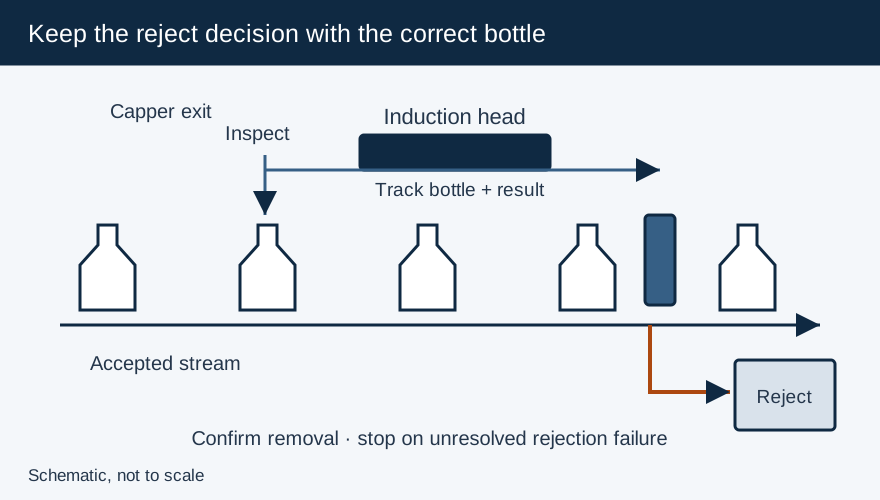
Place inspection and rejection where the detected package can be identified and removed without confusing it with its neighbors. Consider access, bottle stability, cooling requirements and downstream labeling in that decision. Challenge adjacent good and defective samples, speed changes and restarts. This is a commissioning test recommendation; the integrator should implement it using the machine’s approved safe test procedure.
Finish with an interface record the next shift can use
Record station ownership, mechanical change parts, recipe names, running speed, accepted package condition and signal meaning at each transfer. Include the cause-and-effect response for no bottles, no caps, missing liner, blocked downstream conveyor, sealer fault and failed rejection. Label and code inspection require their own acceptance criteria alongside seal quality.
Retain photographs or drawings of the approved guide and sensor positions with the changeover procedure. Use the capper-to-sealer guide for the detailed heating and reject interfaces, and the troubleshooting guide when the finished package changes despite an unchanged recipe.
Primary Sources & Referenced Standards
- E-PAK Machinery — How Fillers, Cappers, Conveyors, Induction Sealers & Labelers Work Together
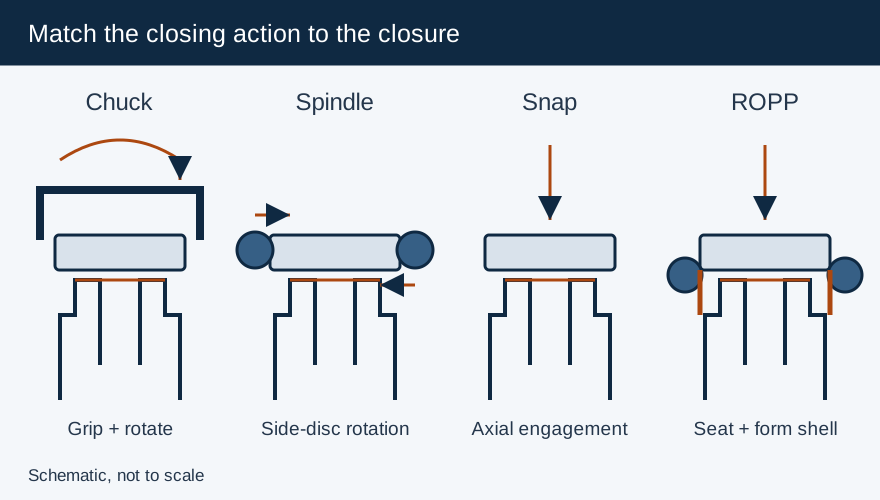
- E-PAK Machinery — Chuck Cappers vs. Spindle Cappers Engineering Comparison
- Enercon: Getting Started with Induction Cap Sealing
- Pillar Technologies — Sealing Unit Verification (SUV) & Line Interlock Variables
- Safety Flammable Products - Enercon Industries Corporation
More about Induction Sealing Machines
Electromagnetic induction cap sealers, flat vs. tunnel sealing coils, kW power-to-line-speed matching, capping head integration, and troubleshooting.
Related Articles
Capping and Induction Sealing: Line Interfaces and Rejection
Specify capper-to-sealer transfer, conveyor stop protection, inspection signals and confirmed rejection for an induction sealing line.
Capping Machines Explained: Match the Cap, Container and Closing Process
Compare chuck, spindle, snap and ROPP closing mechanisms, then specify container support, torque checks and the capper-to-sealer interface.
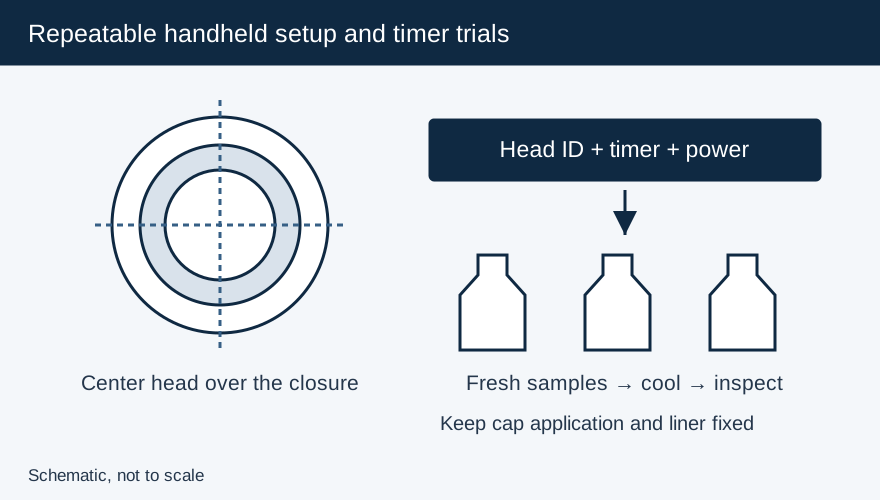
Handheld Induction Sealer Power, Time and Cap Diameter Guide
Choose the correct handheld head for small through 100 mm-plus caps, then qualify timer, power and centering on the actual bottle and liner.