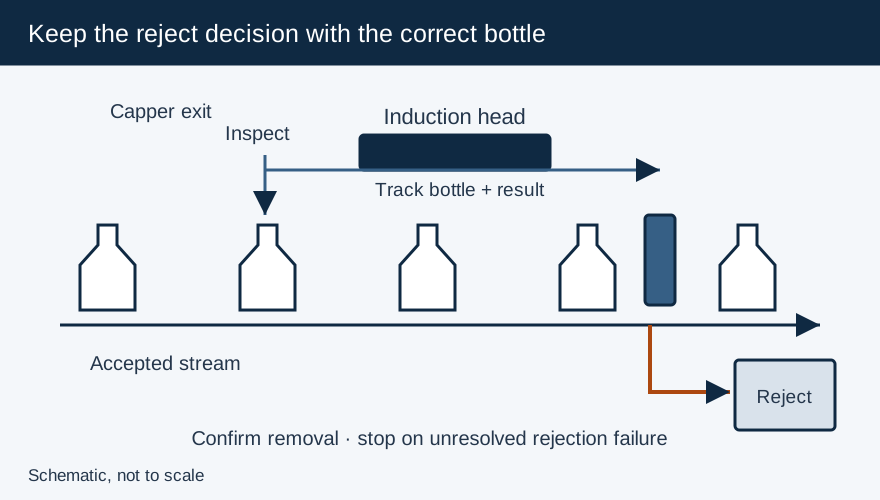
Capping and Induction Sealing: Line Interfaces and Rejection
Specify capper-to-sealer transfer, conveyor stop protection, inspection signals and confirmed rejection for an induction sealing line.

Electromagnetic induction cap sealers, flat vs. tunnel sealing coils, kW power-to-line-speed matching, capping head integration, and troubleshooting.
Specify capper-to-sealer transfer, conveyor stop protection, inspection signals and confirmed rejection for an induction sealing line.
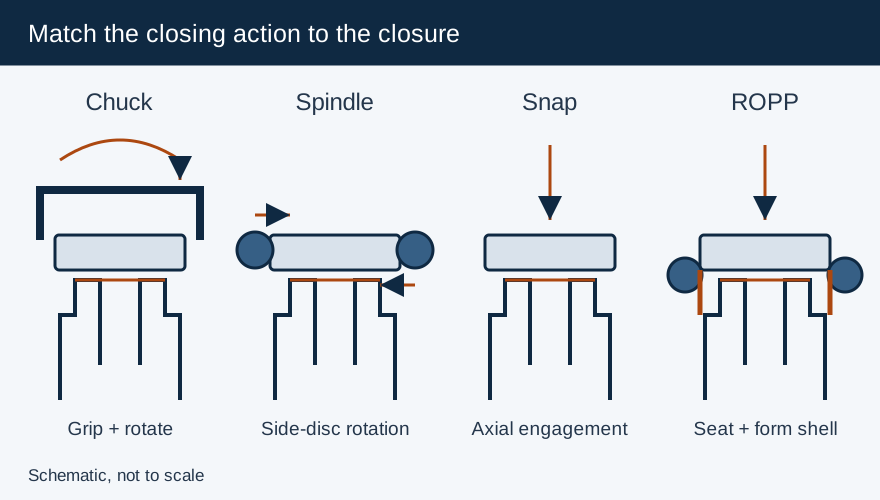
Compare chuck, spindle, snap and ROPP closing mechanisms, then specify container support, torque checks and the capper-to-sealer interface.
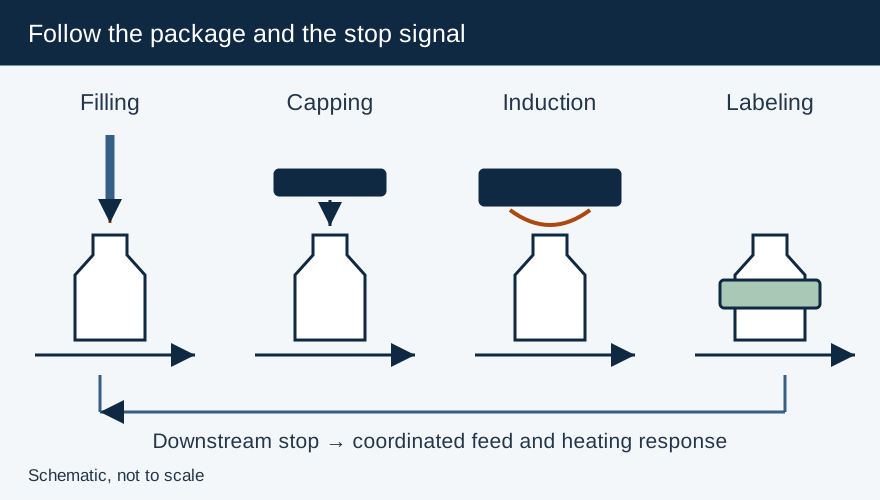
Define conveyor, rate and reject interfaces between filling, capping, induction sealing and labeling, including safe stop and restart behavior.
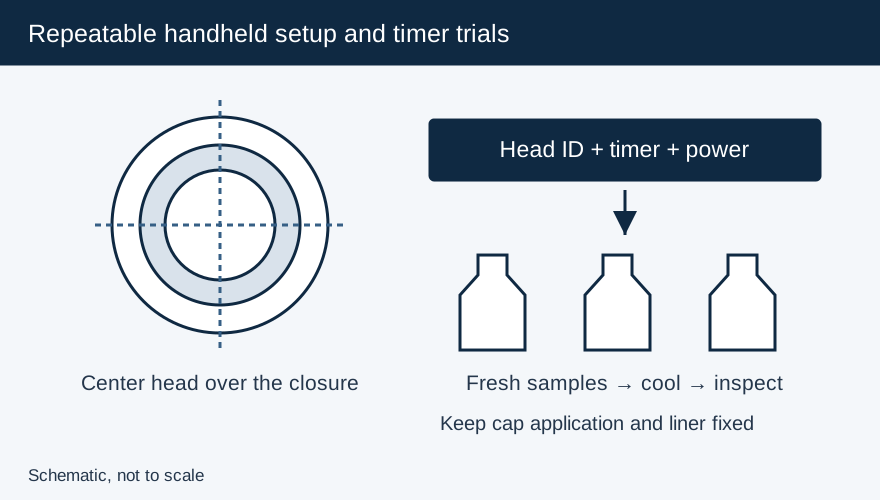
Choose the correct handheld head for small through 100 mm-plus caps, then qualify timer, power and centering on the actual bottle and liner.
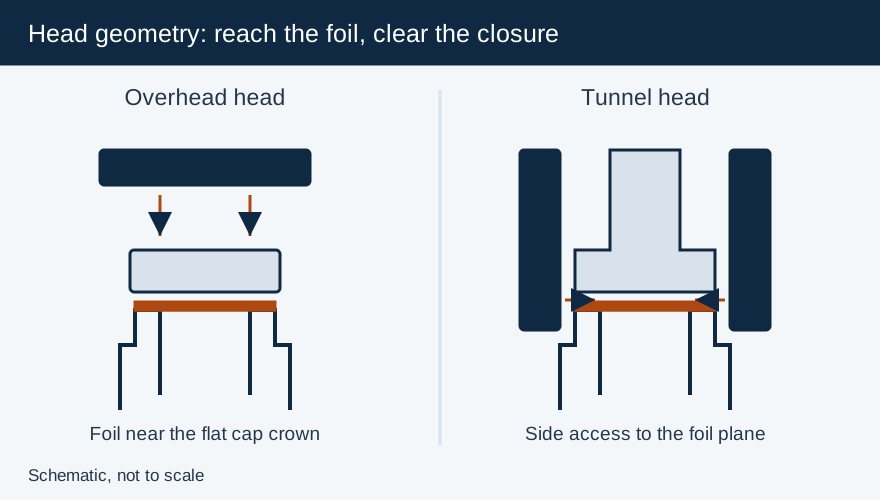
Compare overhead and side-coupled induction heads using foil height, cap profile, bottle clearance and supplier-specific coil ranges.
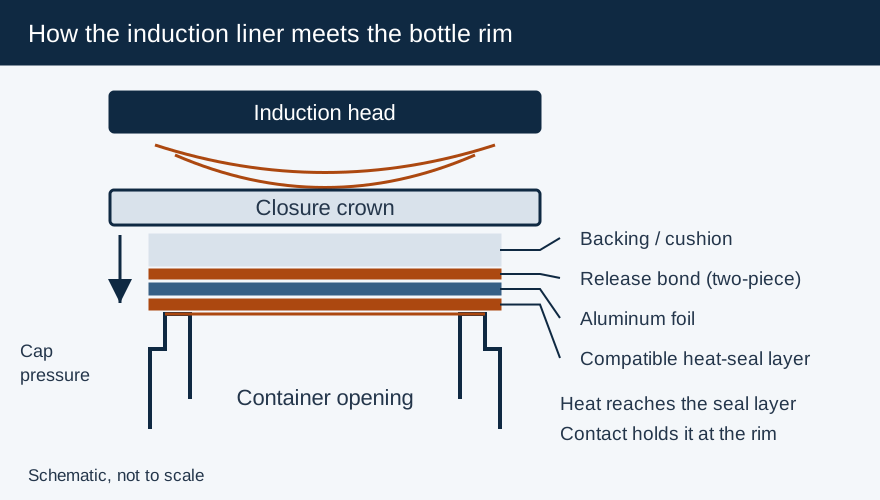
Select induction power, cooling and sealing heads using actual package geometry, then qualify pressure, heat and conveyor time together.
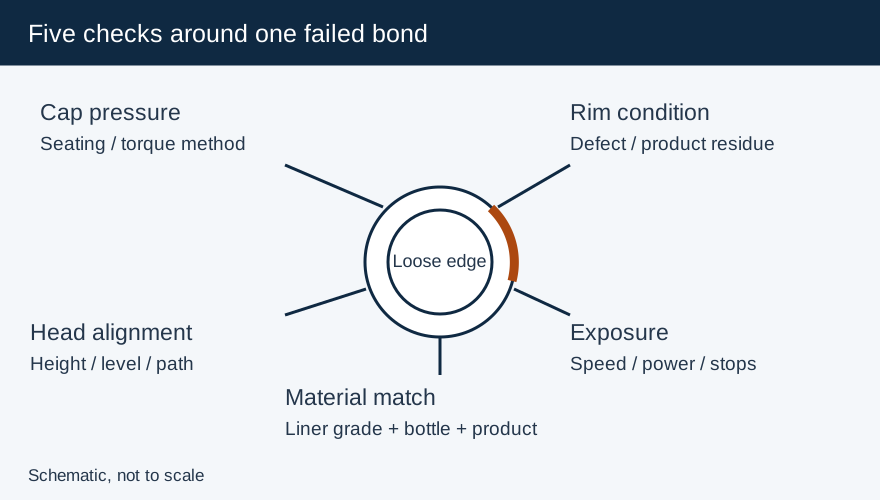
Diagnose missing, weak and overheated induction seals by recording torque, material, rim condition, alignment and speed before changing power.